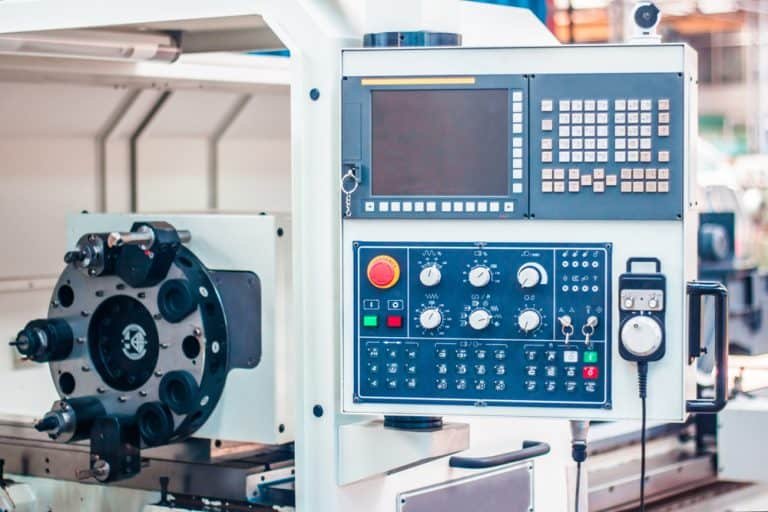
What is CNC Machining?
CNC machining is a very important part of how modern manufacturing works. But what does CNC stand for? What role does it play in manufacturing, and what do CNC machinists do? Even more so, how can people who want to be CNC machinists prepare for and get a job in the field today?
What does CNC stand for?
Computerized Numerical Control is what CNC stands for. It is a way of making things that uses computers and software and code to control the movement of production equipment. CNC machining uses complex machines like grinders, lathes, and turning mills to cut, shape, and make different parts and prototypes. CNC machinists use their knowledge of mechanical design, technical drawings, math, and computer programming to make different metal and plastic parts every day. CNC operators can use a sheet of metal to make an important part for an airplane or car.
What is a computer numerically controlled (CNC) machine?
CNC machines are automated machines that are run by computers that follow sequences of controlled commands that have already been programmed. CNC machines are basically the opposite of “old-school” machines that are controlled by hand wheels, levers, or cams alone. Modern CNC machines understand CNC machining language, which is called G-code, and use it to work. This language tells the machines precise measurements for production, such as feed rate, speed, location, and coordination.
Today’s design and mechanical parts for CNC systems are highly automated, unlike the old, dangerous factory machines you might think of from back in the day. The mechanical dimensions of the parts are defined by computer-aided design (CAD) software, and then computer-aided manufacturing (CAM) software turns those dimensions into instructions for making the parts. Because of this, it is important for the industry to have skilled CNC machinists and programmers who know how to use this high-tech equipment.
Why CNC Machining is Important
Manufacturers in Connecticut make some of the most important things in the world, like jet engines, helicopters, and submarines. And the days of dirty factory work are over, thanks to recent improvements in technology. Workers use their machining skills in a clean, professional environment with the most up-to-date technology.
CNC operators enjoy working in a hands-on field that is always changing and never boring.
With the right training in CNC machining, machinists and operators can help make a wide range of manufactured goods. They are an important part of Connecticut’s booming manufacturing industry and economy as a whole. Skilled CNC Machinists see a product through all of its stages of creation, from the first idea to the design, coding, and then the finished product. In this way, CNC machining is not just a typical manufacturing job. It is also a hands-on, creative, and valuable career path for people who like to see how their work changes over time.
How is it to work with CNC machines?
A typical day for a CNC operator might involve:
Reading blueprints, sketches, and CAD and CAM (computer-aided design and manufacturing) files
Manual, automatic, and computer numerically controlled (CNC) machine tools: setting them up, using them, and taking them apart.
Setting up, aligning, and adjusting cutting tools and pieces of work
Keeping an eye on how and how fast machines work
Parts of machines are turned, milled, drilled, shaped, and ground to specifications.
checking for flaws in finished products by measuring, examining, and testing them.
Putting a smooth finish on parts or products
Showing finished work to customers and making changes if necessary.
For aspiring machinists who want to start an exciting career in this growing field, getting an associate degree and/or certificate from a reputable manufacturing school is a great investment for the future.
Whether they are getting a certificate or a degree, our CNC machine training gives students a complete understanding of how things are made, what materials are used, and the math behind making things. You’ll also learn how to do technical drawings, specifications, and machining with the help of a computer. You’ll also get hands-on experience with modern CNC technologies, which might be the most important thing you learn.
Our new CNC 3-axis milling and turning machines are used to teach our students the skills, knowledge, and experience they need to be successful in the industry. Because CNC operator training is so thorough, students also learn the advanced Mastercam skills they need to program tool location, motion, feeds and speeds.
After finishing these programs, students are ready to take the National Institute for Metalworking Skills (NIMS) test to become a CNC operator.
FAQs
Computer numerical control, or CNC, is a way to control machine tools automatically by putting software on a microcomputer that is attached to the tool. In manufacturing, it is often used to cut metal and plastic parts.
It is perfect for milling slots, cutting sharp edges, and drilling holes in mechanical parts.
CNC Milling Machine. This common CNC machine has built-in tools that drill and cut raw materials with rotary cutting tools.
Plasma-Cutting Machine (CNC)
Lathe Machine (CNC)
Laser Cutting Machine (CNC)
CNC Grinders 6-Axis CNC Machine
The cost of CNC Machining is less.
Less machine operators are needed for this kind of machining because one skilled operator can run several machines at once. Because the CNC is so accurate, it cuts down on mistakes and waste in the manufacturing process.